
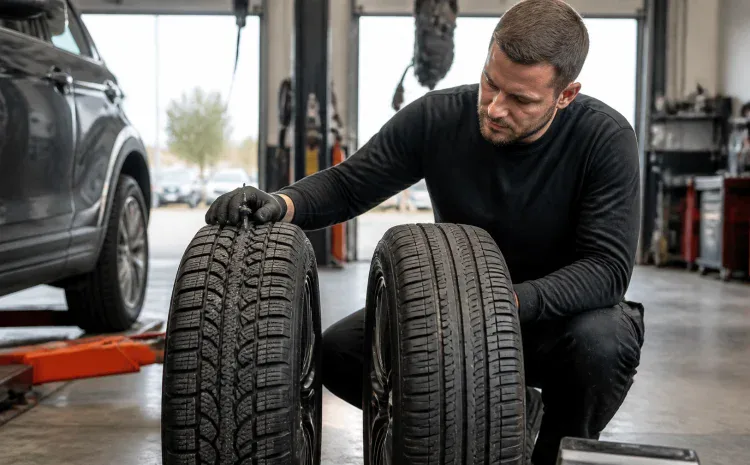
Winter Tires vs. All-Weather Tires: Which Is Better for Your Edmonton Commute?
By late August and September, winter can still feel far away in Edmonton. But colder mornings, shorter days, and the first frost are reminders that tire season is approaching. Choosing the right tires before snow arrives can make a real difference to how your vehicle accelerates, corners, and stops.
The honest answer is that dedicated winter tires usually provide the best performance for Edmonton’s coldest and iciest conditions. However, a quality set of all-weather tires may be a sensible choice for some drivers who want one set of tires year-round.
The right decision depends on your commute, driving habits, budget, and how much winter performance you are willing to trade for convenience.
Edmonton winter driving is more than snow
Edmonton drivers deal with a wide range of winter conditions. One morning may bring dry, extremely cold pavement. The next may involve fresh snow, slush, or a wet road that freezes overnight.
During a typical winter, you can expect:
- Packed snow on residential streets and side roads
- Slush and standing water during warmer spells
- Polished ice at intersections
- Black ice after freeze-thaw cycles
- Deep cold that can reach -20°C to -30°C
- Ruts and uneven surfaces caused by repeated freezing and snow clearing
According to the University of Alberta’s overview of winter in Edmonton, winter temperatures can remain below freezing for extended periods, with occasional severe cold snaps. That matters because tire rubber does not behave the same way at +10°C as it does at -25°C.
Your vehicle’s traction control, all-wheel drive, and anti-lock brakes can help, but none of these systems can create grip where the tires have very little contact with the road.
Winter tires vs. all-weather tires: the main differences
Rubber compound
A dedicated winter tire uses a rubber compound designed to stay flexible in low temperatures. This flexibility helps the tread conform to cold pavement, packed snow, and uneven icy surfaces.
Regular all-season tires become harder as temperatures drop. The commonly used rule of thumb is that all-season and summer tires begin losing flexibility below approximately 7°C. They may still look fine, but their cold-weather traction can decline well before the first major snowfall.
All-weather tires use a compromise compound. They are designed to remain more flexible in cold weather than conventional all-season tires while still lasting through warmer months. That makes them more winter-capable than regular all-season tires, but they generally do not provide the same level of grip as a dedicated winter tire during severe cold or on glare ice.
Tread design and siping
Winter tires typically have tread patterns designed specifically for snow and ice. They use deeper grooves to move snow and slush away from the contact patch, along with many small cuts called sipes.
Sipes create additional biting edges that help the tire grip packed snow and slippery surfaces. A winter tread may also be designed to remain effective as snow fills and clears from the tread blocks.
All-weather tires also have more winter-oriented tread than standard all-season tires. Many provide good traction in light snow, slush, and ordinary cold-weather driving. However, their tread design has to work in summer rain and dry conditions as well, so it is usually less specialized than a dedicated winter tire.
What the 3PMSF symbol really means
When you inspect a tire sidewall, look for the Three-Peak Mountain Snowflake, often called the 3PMSF symbol. It looks like a snowflake inside a mountain outline.
This symbol indicates that the tire has passed a standardized severe-snow traction test. It is found on dedicated winter tires and many all-weather tires.
That makes it much more meaningful than an M+S, or mud-and-snow, marking. M+S tires may offer some additional traction compared with basic summer tires, but the marking alone does not confirm that the tire has passed the severe-snow test.
There is one important detail: 3PMSF is not a guarantee of identical winter performance. The test focuses on traction in packed snow. It does not fully measure braking and cornering on glare ice, wet pavement, or every type of winter surface.
For more detail, Transport Canada’s winter tire guidance explains why winter-rated tires are recommended when temperatures consistently fall below 7°C. The Tire and Rubber Association of Canada also distinguishes the severe-snow rating from the broader category of dedicated winter tires.
When dedicated winter tires make more sense
Dedicated winter tires are generally the better choice if you:
- Drive every weekday regardless of weather
- Leave home early, before roads are fully cleared
- Regularly travel on the Anthony Henday, highways, or rural roads
- Deal with steep streets, unplowed neighbourhood roads, or icy intersections
- Need to drive during -20°C or colder conditions
- Frequently carry passengers or valuable equipment
- Want the strongest possible winter braking and cornering performance
They are especially valuable for drivers who cannot simply postpone a trip when conditions deteriorate. Even a well-maintained vehicle can become difficult to control when its tires are too hard or lack the tread needed for snow and ice.
For most Edmonton drivers who spend the entire season commuting, a dedicated set of four winter tires is the safest performance choice. They should be installed on all four wheels, not just the drive wheels. Mixing winter and non-winter tires can create unpredictable handling, especially during emergency braking or a lane change.
When all-weather tires may be the practical choice
All-weather tires can make sense if you:
- Want one set of tires for the entire year
- Mostly drive within Edmonton on maintained roads
- Have a shorter, lower-speed commute
- Can avoid driving during the worst storms
- Prefer not to pay for seasonal mounting, storage, and changeovers
- Are replacing worn tires and want better winter capability than a standard all-season tire
A good all-weather tire with the 3PMSF symbol is not the same as a basic all-season tire. It is a reasonable year-round compromise for some urban drivers.
Still, compromise is the key word. On glare ice, deep snow, steep hills, or very cold pavement, all-weather tires are unlikely to match the grip of a dedicated winter tire. If you drive frequently in challenging conditions, the convenience of one set may not justify the reduction in peak winter performance.

The “all-season” trap
The names can be confusing. “All-season” does not mean “ideal in all seasons.” Most conventional all-season tires are designed to provide balanced performance in moderate temperatures. They are not necessarily engineered for Edmonton’s prolonged cold and snow.
Before buying, check the sidewall rather than relying on the product name. If you want a tire capable of severe-snow service, look for the 3PMSF symbol.
Also consider the tire’s actual condition. A tire with the right rating may still perform poorly if it has:
- Low tread depth
- Uneven wear
- Cracking or age-related deterioration
- Incorrect air pressure
- Damage from potholes or curbs
Tire pressure is particularly important in Edmonton. Pressure drops as temperatures fall, so check it regularly during the winter and follow the vehicle manufacturer’s recommended cold pressure.
Cost: compare the full ownership picture
Dedicated winter tires cost more upfront because you need a second set. You may also need wheels, seasonal changeovers, balancing, and storage.
However, using two sets means each set accumulates mileage for only part of the year. That can spread wear over time. A second set of wheels may also make seasonal changeovers simpler and reduce repeated tire mounting.
All-weather tires usually cost less to manage because there is only one set. You avoid storage and seasonal swaps, but that one set handles every kilometre you drive in summer and winter. It may wear faster than a dedicated seasonal setup, depending on the tire, vehicle, alignment, and driving style.
The cheapest option is not always the least expensive over several years. When comparing prices, ask about the complete cost: tires, wheels, installation, balancing, storage, and expected service life.
How to decide before winter arrives
Start with your real driving routine, not just your vehicle type. All-wheel drive can help your vehicle move forward, but it does not replace winter-rated tires when you need to stop or turn.
Ask yourself:
- How often must I drive during snowstorms or extreme cold?
- Is most of my commute on major roads, side streets, or highways?
- Can I stay home when roads are dangerous?
- Do I want maximum winter traction or one set of tires year-round?
- Is my current suspension, steering, and braking system ready for winter?
A tire inspection should be part of your broader vehicle maintenance in Edmonton. Worn shocks, loose suspension parts, poor alignment, and weak brakes can all affect how well your tires work.
At Vroom Auto, we provide straightforward advice for all makes and models. Our dealership-trained technicians can inspect your tires, brakes, steering, and suspension before winter arrives, then explain your options without pushing you toward the most expensive setup. You can also review our full auto repair services in Edmonton or book an appointment.
The honest bottom line
For regular Edmonton driving through deep cold, packed snow, and icy freeze-thaw conditions, dedicated winter tires are the strongest choice.
For mostly urban driving and year-round convenience, quality 3PMSF all-weather tires can be a sensible compromise.
What you should avoid is assuming that ordinary all-season tires are automatically suitable for an Edmonton winter. Check the symbol, inspect the condition, maintain the correct pressure, and match your tire choice to the roads you actually drive.
If you are looking for an honest mechanic in Edmonton or affordable auto repair in Edmonton before the season changes, contact Vroom Auto at 7223 52 Street NW, call (780) 800-9759, or schedule your visit online.